Why is Eddie a Democrat: The Case on Public Education

Public education was built for a different America. And Eddie Ableser thinks that’s exactly the problem.

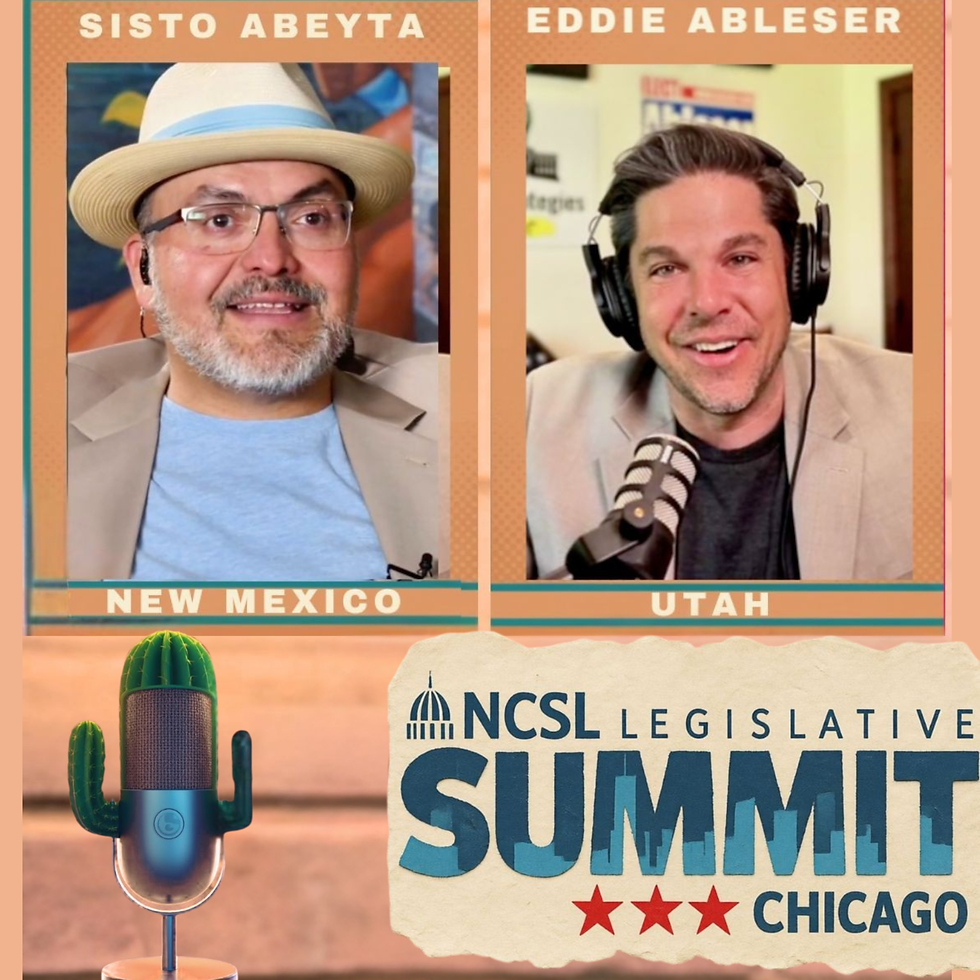
In this solo episode of Cactus Crossfire, Eddie returns to a question he keeps asking himself: why am I a Democrat?
Instead of answering it with slogans, he uses a real test case: what Democrats say they believe about education versus what the system actually delivers.The classroom still looks like the industrial age.
Eddie starts with a simple observation that hits hard once you notice it. Our kids still sit in rows, move on bells, and cycle through subjects in the same basic structure their great great grandparents experienced. Meanwhile, almost everything else in American life has evolved fast.
He argues that if we can innovate in how we shop, work, and communicate, we should be able to innovate in how kids learn. If we do not, we are choosing stagnation.
Kids do not all learn the same way
A big part of Eddie’s case is that the system is built around a narrow definition of intelligence. He points to the idea of multiple learning styles and intelligences and asks why public policy still overweights only a couple of them.
He argues that families should have access to learning environments that fit different students, including arts infused programs, spatial and visual learning, and kinesthetic approaches that let kids move and engage.
Why Eddie supports public charter schools
Eddie is blunt about this: public charter schools are public schools. They are funded by taxpayer dollars and exist to serve students.
For him, the real value of public charter schools is not a buzzword. It is local control. He argues that hyper local decision making gives parents, families, and communities real power to shape outcomes for their kids. It also creates room for different pedagogical models, instead of forcing every community into one district wide approach.
Democrats used to champion charters
Eddie walks through the political history as he sees it. He points to early charter laws, national Democratic support in the 1990s, and the push to expand public charter schools as part of a broader innovation agenda.
Then he argues something shifted. He points to a post 2016 change in Democratic messaging and the role of teachers unions in reshaping how the party talks about charter schools.
Eddie is clear that unions have a role in protecting employees. But he argues that when the incentives of adult centered systems collide with what kids need, Democrats should be willing to say so.
A party identity problem, and the Hasan Piker question
Eddie also uses this solo episode to raise a broader concern about the Democratic Party’s identity and who gets treated as a legitimate voice inside the coalition.
He argues that Democratic presidential candidates have a Hasan Piker problem, and that ignoring it out of fear of alienating the party’s most extreme factions is a mistake.
Eddie’s view is that if the party wants to win, it has to be willing to draw clearer lines about what it stands for, and what it does not.
The accountability question
Eddie’s challenge to listeners is direct. When a Democrat talks about education, ask one question: Do you support local control?Do you support families and communities having real power to shape outcomes for their kids?
Or do you support keeping education locked in an industrial scale model that treats students like standardized outputs?
Listen and weigh in
This episode closes with Eddie’s spicy, prickly, quickly takes and a reminder that this show is built for debate.
If you agree, say why. If you disagree, even better. Bring your argument.
👇 Watch, listen, and join the debate:
YouTube: https://youtu.be/csbAVAArdV0
Apple Podcasts: https://podcasts.apple.com/us/podcast/cactus-crossfire/id1859717200?i=1000789454371
Website: https://www.cactuscrossfire.com
Instagram: https://www.instagram.com/cactuscrossfire/
Facebook: https://www.facebook.com/cactuscrossfire
Hosts:
TikTok - @eddie.ableser
Instagram - @ezableser
TikTok - @sisto.abeyta
Instagram - @sistoabeyta


Comments