Ep. 6 | Violence isn’t discourse. Outrage isn’t wisdom. We choose civil courage, open minds, and showing up before the spiral.

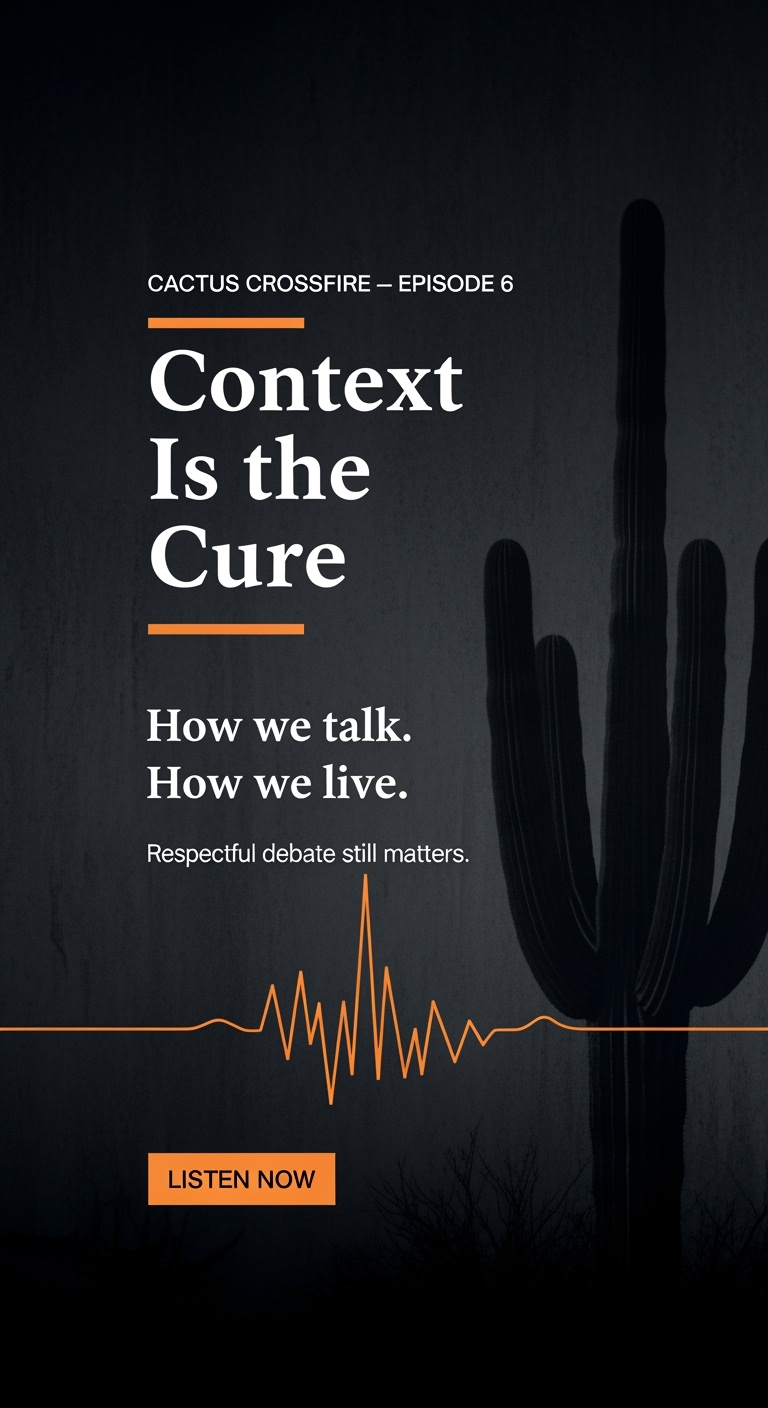
The antidote to chaos isn’t silence—it’s disciplined civility and practical care for the mind.
Don’t be a closed algorithm. Be an open-source human.
Fact-check yourself, hold your line, and hold each other.
Three days after the Utah shooting of Charlie Kirk, we didn’t record to add noise. We recorded to draw a line. Violence is not discourse. Outrage isn’t wisdom. Shock-jock politics is not leadership. If you want a society that holds, then the work is not dunking on “the other side.” The work is rebuilding the social contract—person by person, episode by episode, policy by policy.
The Real Message
Responsibility beats performative righteousness.
Mental illness is the unaddressed driver politicians reduce to a gun-only talking point.
Algorithms train us to confuse identity with ideology.
Inclusion that belittles anyone isn’t inclusion. We have to celebrate everyone, and still meet group-specific needs with honesty.
The antidote is both civic and human: be accountable with your mic and present with your people.
What the Mic Owes the Moment
Cactus Crossfire’s founding promise is not to “win clips” but to raise the level of discourse. That means:
No dehumanizing shortcuts. The other side is not a cartoon.
Make the line between opinion and fact explicit.
Incite curiosity, not cruelty. If we “incite,” it’s to push listeners to research, challenge us, and learn.
Why it matters: Tone-shaping is power. Talking heads can make grievance feel like virtue—and that road ends in someone deciding violence speaks louder than persuasion.
The Algorithmic Trap—and How to Walk Out
We mapped the radicalization flywheel:
Identity hunger + grievance + dopamine hits
A closed-loop algorithm feeding what confirms you
Social status from “owning” opponents
Emotional addiction to being right
Exit ramps you can control:
Daily dose of disconfirmation: read one credible source you disagree with.
Follow bridges: subscribe to thinkers who debate in good faith from both sides.
Slow share: force a 10-minute lag before posting on hot news; fact-check once.
Language check: replace labels (“they’re all…”) with behaviors (“this claim relies on…”).
Mental Health—The Crisis Politicians Shortcut
We refuse to flatten complex violence into a single policy wedge. If you want fewer tragedies:
Treat serious mental illness as a first-order public health priority.
Expand early intervention and coordination between schools, families, providers, and law enforcement.
Normalize help-seeking, especially among men, where suicide risk is 3x higher.
Teach layperson skills: what to watch for, what to ask, where to refer.
The human tool everyone has
Presence: be 100% in someone’s moment.
Touch and laughter: they physiologically lower stress chemistry; it’s not poetic—it’s biochemical.
Check-in script: “I’ve noticed [specific change]. I’m here, no judgment. Want to talk for five minutes or go for a walk?”
Inclusion Without Inversion
You can honor historically marginalized communities without shaming anyone else. Demonizing young white men in the name of inclusion is still demonizing. The standard is universal dignity, plus targeted help where data shows need. Both/and, not either/or.
Proof Civility Can Govern
We highlighted New Mexico leaders—Democrat Peter Wirth and Republican Bill Sharer—co-sponsoring mental health reforms.
Disagreement + respect + shared stakes = outcomes.
That’s a template for how communities can address complex issues without collapsing into tribal performance.
Accountability Starts at Home
Admit when you’re wrong (in public, not just in DMs).
If you share a false story, correct it conspicuously.
Don’t let family debates degrade. Protect relationships first; model curiosity over victory.
Separate identity from ideology: you are not your last opinion. You can change your mind and keep your dignity.
Core Pull Quotes
“Don’t be a closed algorithm. Be an open-source human—ask for both sides, read both sides.”
“Loving someone is sacrificing what you want to be 100% in their moment.”
“We’ll incite people for one thing only—learning.”
Tri-Takes Reframed as a Challenge
Spicy (Policy Courage): Public-sector retirement costs need sustainable redesign—protect dignity and math at the same time.
Prickly (Moral Line-Setting): Don’t mock death. If your ideology needs cruelty, you don’t have a worldview—you have a habit.
Quickly (Civic Readiness): Special session Oct 1 in New Mexico; early voting is imminent. Make a plan to vote. Bring one friend.
What We Want You To Do This Week
Text someone who’s been “off.” Offer 10 minutes today. Don’t diagnose. Be present.
Add one credible counterpoint to your media diet. Keep it for 30 days.
Before posting outrage, write the best steelman version of the other side in two sentences. If you can’t, don’t post yet.
Learn one local mental health resource and save it to your phone. Use it once for someone else.
Roundtable Invitation
We’re gathering listener stories for an upcoming episode:
Times you crossed an ideological line and had a real conversation
Moments you intervened early in a mental health spiral—what helped, what didn’t
How you changed your media diet and what it changed in you Send a summary and whether you’re comfortable using your name on air.
Credits
Recorded at 8688 Studios (Albuquerque, NM)
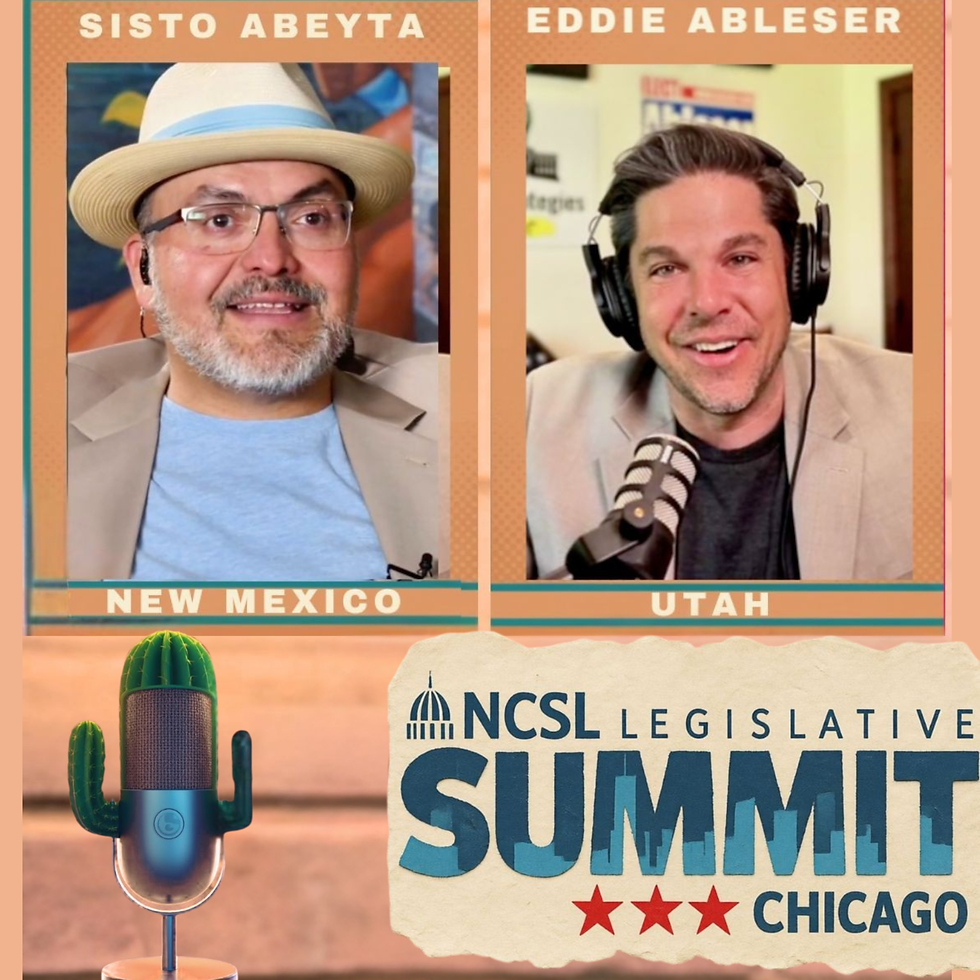
Hosts: Sisto Abeyta, Eddie Ableser
Producer: Mandi Nunez
With respect to our Utah listeners and all communities processing the trauma of public violence
Call to Action
Watch Episode 6 and engage.
Listen and subscribe for future episodes.
Join our email list for practical checklists and resource guides referenced in each episode.
Share this post with one person outside your political bubble and ask them to annotate it with what they disagree with—and why.



Comments